By Conor Early · October 26, 2026
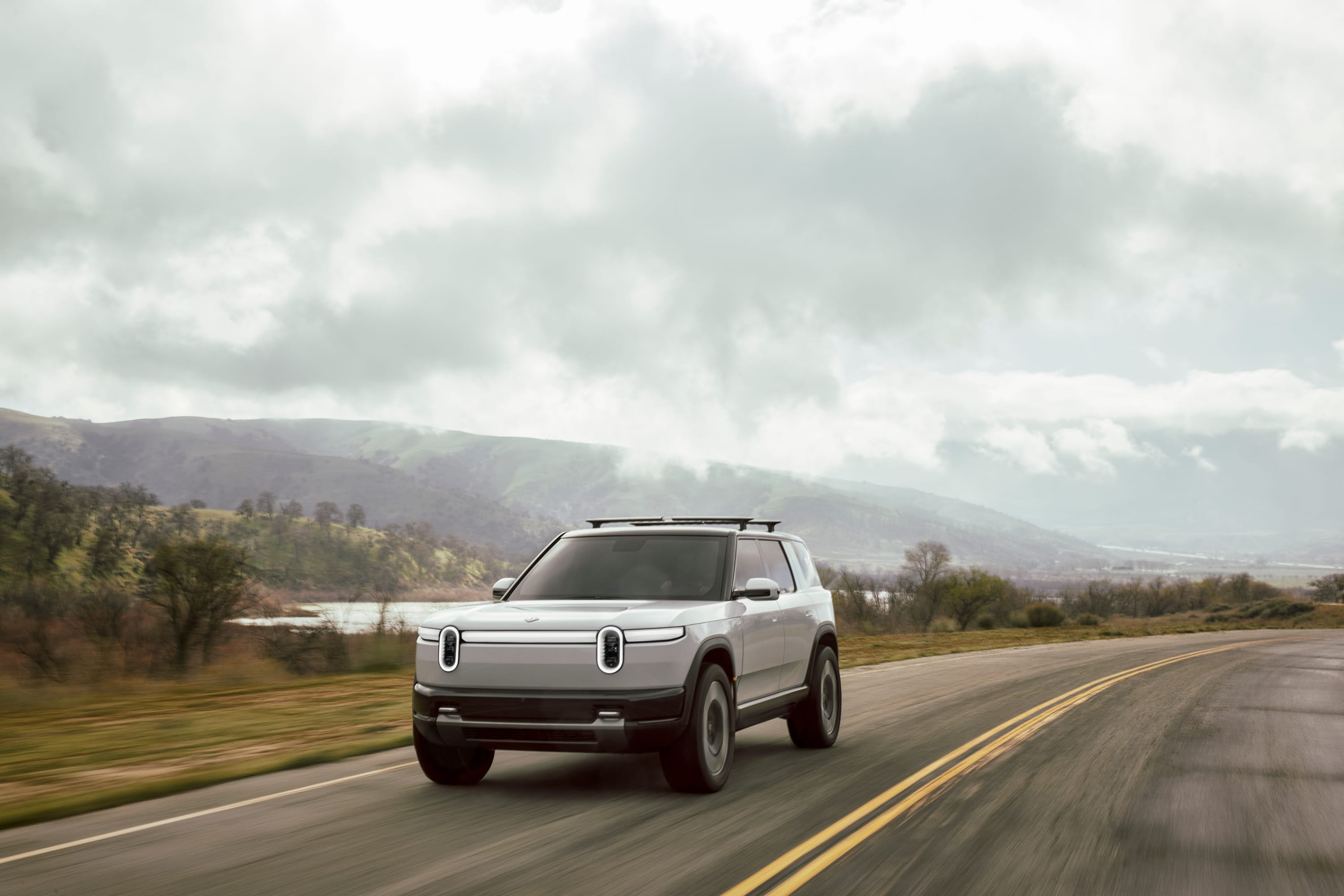
February 2024 archive R2 photograph. Vehicle context; not a charging-speed test. Photo: Eric Anderson / Rivian. Source and rights. Rivian editorial-use media.
Explainer · Based on Rivian’s September 23, 2026 charging guidance.
Rivian advertises up to 150 miles added in about 15 minutes and a 10–80% charging session under 30 minutes under optimal conditions. Those figures describe a charging window, not a promise that every roadside stop will take the same time.
Battery temperature, starting charge, the station and conditions can change the result. A useful trip plan therefore leaves room for the actual session, plus the time needed to reach the charger and park. The published 10–80% figure should not be read as a time to fill an empty battery to 100%.
R2 has a native NACS port; CCS fast chargers require the compatible DC adapter. Check the specific station in Rivian’s navigation rather than treating the shape of a connector as a complete compatibility check.
For an owner report, record arrival and departure charge, energy delivered and elapsed charging time. Add the station and conditions. That makes the experience useful to someone planning the same route, without turning one good or bad stop into a universal R2 charging claim.
Source: Rivian’s R2 fast-charging guide.